
Dubai South is one of the emirate’s most strategically significant districts, a master-planned economic zone built around Al Maktoum International Airport and the Expo legacy site, home to aviation businesses, logistics and freight operators, e-commerce fulfilment companies, and the free zone entities that cluster around this global gateway.
For these businesses, accurate financial reporting is fundamental, aviation and logistics operations carry substantial assets and complex revenue, free zone entities must report qualifying income correctly, and investors and boards expect reporting to an institutional standard. Professional Financial Reporting Dubai South businesses can rely on turns complex operational activity into clear, credible statements.
Our financial reporting service for Dubai South businesses provides the rigorous, standards-based reporting that aviation, logistics, and free zone businesses need, from IFRS financial statements and qualifying income reporting to monthly management accounts, board packages, and asset depreciation.
Financial Reporting for Dubai South’s Business Community
The strategic, asset-heavy character of Dubai South means financial reporting requirements are more demanding here than in most districts, and each business type has its own priorities.
Aviation and logistics businesses: Aviation operators, freight forwarders, and logistics companies carry significant capital equipment and complex, high-volume revenue, making asset accounting and IFRS reporting central to their financial statements.
Free zone entities: Businesses in the Dubai South free zone must report their qualifying and non-qualifying income correctly to support their Corporate Tax position, particularly where they seek Qualifying Free Zone Person status.
E-commerce and fulfilment businesses: Fulfilment and e-commerce operators handle high transaction volumes and inventory, requiring accurate revenue and stock reporting.
Businesses seeking investment: Growth businesses and those backed by investors need reporting prepared to an institutional standard for boards, shareholders, and lenders.
Our Financial Reporting Services for Dubai South
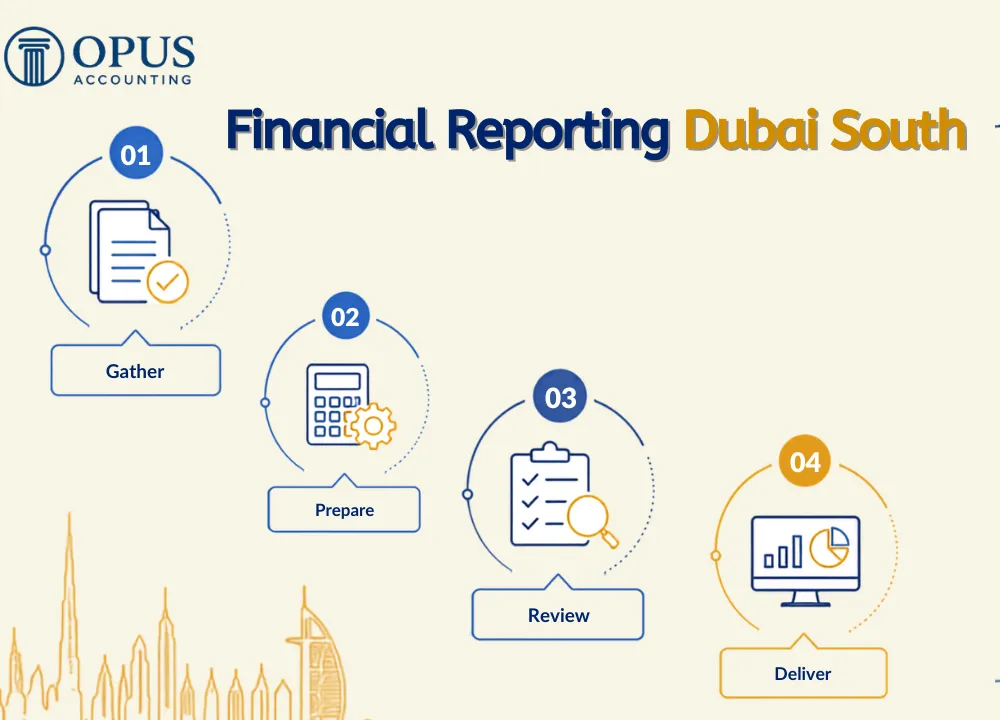
We provide a comprehensive Financial Reporting Dubai South service:
- IFRS financial statements for aviation and logistics businesses.
- Free zone qualifying income reporting.
- Monthly management accounts with commentary.
- Investor and board reporting packages.
- Fixed asset depreciation for aviation equipment and capital assets.
- Balance sheet, profit and loss, and cash flow statement preparation.
- Revenue recognition for complex and high-volume operations.
- Cost of goods sold and margin analysis.
- Audit-ready financial statements and audit support.
- Corporate Tax and VAT-ready reporting.
IFRS Reporting and Free Zone Qualifying Income
For Dubai South’s aviation, logistics, and free zone businesses, two reporting disciplines are especially important, IFRS-compliant statements for asset-heavy operations and accurate qualifying income reporting.
IFRS financial statements aviation logistics: Aviation and logistics businesses have some of the most demanding reporting requirements in the market, substantial capital assets, complex revenue arrangements, and often multi-currency operations. IFRS financial statements aviation logistics ensures these are reported to the required standard, with revenue recognised correctly, assets properly accounted for, and statements that satisfy the FTA, banks, and investors alike. This reporting feeds directly into our corporate tax filing services, so reporting and compliance align.
Free zone qualifying income reporting: For Dubai South free zone entities seeking or holding Qualifying Free Zone Person status, the correct reporting of qualifying versus non-qualifying income is central to the Corporate Tax position, because only qualifying income benefits from the 0% rate and the de minimis threshold on non-qualifying income must be carefully monitored. Free zone qualifying income reporting distinguishes and reports these income streams correctly, supporting the QFZP position and the audited financial statements it requires. The qualifying income framework and conditions are set out by the Federal Tax Authority, and you can read the official guidance on the FTA corporate tax pages. Where an audit is required, ouraudit and assurance services provide it.
Revenue recognition: Aviation, logistics, and e-commerce businesses often have complex revenue arrangements spanning services delivered over time, multiple performance obligations, and high transaction volumes, and we ensure revenue is recognised correctly under IFRS so reported income is accurate.
Management Accounts, Board Packages, and Asset Depreciation
Beyond statutory statements, Dubai South businesses benefit from timely management reporting, institutional-quality board packages, and correct accounting for their substantial assets.
Monthly management accounts: Running an asset-heavy, high-volume business well requires timely information throughout the year, not just an annual view. Monthly management accounts give Dubai South business owners and managers a regular, up-to-date picture of performance, profit, margins, and key trends, with commentary that turns the numbers into insight, so decisions are made on current information.
Investor board reporting packages: Investor-backed and board-governed businesses in Dubai South need reporting that meets institutional expectations. Investor board reporting packages present financial performance, KPIs, variances against budget, and forward outlook in a clear, professional format suited to boards, shareholders, and lenders, giving stakeholders the confidence that the business is well run and well reported.
Fixed asset depreciation aviation equipment: Aviation and logistics businesses hold substantial and high-value capital assets, aircraft ground equipment, handling machinery, vehicles, and specialised logistics infrastructure, all of which must be accounted for and depreciated correctly. Fixed asset depreciation aviation equipment maintains proper fixed asset registers and applies appropriate depreciation, so the balance sheet reflects the true carrying value of these assets and profit is stated accurately after the correct depreciation charge.
FAQ’s | Financial Reporting Dubai South
1. Our Dubai South aviation business has complex revenue and major equipment. Can you handle our reporting?
Yes. IFRS financial statements aviation logistics is built for exactly this. We recognise your revenue correctly under IFRS, account properly for your capital equipment, and prepare statements that satisfy the FTA, banks, and investors. Combined with fixed asset depreciation aviation equipment, this ensures both your income and your substantial asset base are reported accurately.
2. We are a free zone entity seeking QFZP status. How should our income be reported?
Through free zone qualifying income reporting, we distinguish your qualifying income from non-qualifying income and report each correctly, while monitoring the de minimis threshold that applies to non-qualifying income. This supports your Qualifying Free Zone Person position, because only qualifying income benefits from the 0% rate, and it underpins the audited financial statements that QFZP status requires.
3. Our board and investors need regular reporting. Can you produce that?
Yes. Investor board reporting packages present your financial performance, KPIs, variances against budget, and forward outlook in a clear, institutional-quality format designed for boards, shareholders, and lenders. This gives your stakeholders confidence in both the business and the quality of its reporting.
4. How should our aviation ground equipment be depreciated?
Under fixed asset depreciation aviation equipment, we maintain a proper fixed asset register and apply appropriate depreciation over each asset’s useful life, so your balance sheet reflects the true carrying value of your equipment and your profit is stated correctly after the right depreciation charge. Accurate asset accounting matters especially for asset-heavy aviation and logistics businesses.
5. What are monthly management accounts and why do we need them?
Monthly management accounts are regular, up-to-date reports on your performance, profit, margins, and key trends, delivered monthly with commentary rather than once a year. For a high-volume, asset-heavy Dubai South business, they let you manage on current information and act on issues while there is still time, which annual statements alone cannot offer.
Financial Reporting for Your Dubai South Business
Dubai South sits at the heart of Dubai’s aviation, logistics, and trade ambitions, and its businesses carry reporting requirements to match. Our Financial Reporting Dubai South service meets that demand with rigorous, standards-based reporting, from IFRS financial statements and qualifying income reporting to monthly management accounts, board packages, and asset depreciation, so every Dubai South business has reporting it can rely on and stand behind.
Our financial reporting services and audit and assurance services help businesses build better reporting, compliance, and financial control, and you can explore the wider range of accounting services we offer across Dubai. Contact us today for a free consultation, and for Legal Contract Drafting contact Omam Consultancy in Dubai.