
Mastering Financial Reporting for Business Bay Companies: A Strategic Imperative
Business Bay, Dubai’s pulsating central business district, is a vibrant ecosystem where innovation meets opportunity. From cutting-edge technology startups to established professional service firms, financial institutions, and multinational corporate offices, businesses here operate in a highly competitive and regulated environment. In such a sophisticated landscape, the demand for precise, insightful, and compliant financial reporting for Business Bay companies is not merely an administrative task—it’s a strategic imperative.
Accurate financial reporting is the bedrock upon which sound business decisions are built. It provides stakeholders, from investors and banks to management and regulators, with a transparent view of a company’s financial health and performance. For businesses in Business Bay, this means adhering to rigorous International Financial Reporting Standards (IFRS), satisfying investor expectations, meeting banking covenants, and providing management with the granular data needed to navigate a fast-moving market. Our expert financial reporting service is specifically designed to meet the advanced requirements of businesses operating in this premier commercial hub.
The Critical Need for Expert Financial Reporting in Business Bay
Business Bay companies face unique challenges and opportunities that underscore the importance of robust financial reporting. The district is a magnet for international investment and talent, fostering a dynamic commercial culture that demands financial transparency and strategic foresight.
Navigating Business Bay’s Dynamic Economic Landscape
The sheer diversity and ambition of businesses within Business Bay mean that financial reporting cannot be a one-size-fits-all solution. Each sector—be it technology, professional services, or finance—comes with its own set of accounting complexities, regulatory mandates, and performance metrics. Companies need financial reports that not only comply with local and international standards but also provide sector-specific insights that drive growth.
Beyond Compliance: Driving Strategic Decisions
While compliance with IFRS and local regulations is non-negotiable, truly expert financial reporting goes far beyond merely ticking boxes. It transforms raw financial data into actionable intelligence. For Business Bay enterprises, this means having management accounts that offer a detailed snapshot of operational efficiency, profitability drivers, cash flow patterns, and key performance indicators (KPIs). Such intelligence is vital for making informed decisions on investment, expansion, cost control, and overall business strategy.
Tailored Financial Reporting Solutions for Business Bay Companies
Recognizing the diverse nature of businesses in Business Bay, our services are meticulously crafted to address the specific financial reporting requirements of each sector.
Professional Service Firms: Mastering Revenue Recognition and WIP
Professional service firms in Business Bay, including legal practices, consulting agencies, and creative studios, often grapple with complex revenue recognition scenarios, especially under IFRS 15. Our specialized financial reporting for Business Bay companies in this sector includes:
- IFRS 15 Revenue Recognition: Accurate reporting of revenue over time or at a point in time, considering contract modifications, variable consideration, and distinct performance obligations.
- Contract Asset and Liability Reporting: Proper classification and measurement of assets and liabilities arising from customer contracts.
- Work in Progress (WIP) Management: Detailed tracking and valuation of unbilled work, crucial for accurate revenue and cost matching.
- Partner Equity Statements: Transparent reporting of individual partner capital accounts, drawings, and profit allocations.
- Client Profitability Analysis: Providing insights into the profitability of individual clients or service lines, helping firms focus resources effectively.
Technology and SaaS Companies: Unlocking Growth with Key Metrics
Business Bay is home to a burgeoning technology and SaaS (Software as a Service) sector, which operates with a distinctive economic model. Our financial reporting for Business Bay companies in this area is tailored to capture the unique nuances of digital businesses and their rapid growth trajectories.
Deep Dive into SaaS Revenue Reporting
For SaaS companies, traditional financial metrics often don’t tell the whole story. Our monthly management accounts include a comprehensive SaaS revenue dashboard, providing critical insights such as:
- MRR (Monthly Recurring Revenue) and ARR (Annual Recurring Revenue): Core metrics reflecting the predictable revenue stream from subscriptions.
- Revenue by Tier/Product: Understanding which offerings contribute most to the top line.
- New Business MRR, Expansion MRR, Contraction MRR, Churned MRR: A detailed breakdown of revenue changes, indicating growth, upsells, downgrades, and customer attrition.
- Net Revenue Retention (NRR): The percentage of prior period revenue retained and grown from existing customers. NRR is arguably the most vital metric for SaaS business health, indicating the strength of the customer base and the efficiency of expansion sales, crucial for long-term valuation and investor confidence.
Unpacking Unit Economics: LTV, CAC, and the LTV:CAC Ratio
Investors in Business Bay technology companies keenly scrutinize unit economics to assess long-term viability. Our financial reporting includes detailed analysis of:
- Customer Acquisition Cost (CAC): The cost to acquire a new paying customer.
- Customer Lifetime Value (LTV): The total revenue a business can reasonably expect from a single customer account over the projected customer relationship.
- LTV:CAC Ratio: The primary metric investors use to assess the scalability and profitability of a SaaS business. We provide monthly tracking of these metrics against targets, offering early warnings of deteriorating unit economics and enabling proactive adjustments to marketing and sales strategies.
Optimizing R&D Efficiency and Free Cash Flow
Investment in product development is central to technology companies. Our financial reporting helps evaluate:
- R&D Efficiency: Tracking R&D cost as a percentage of revenue and the revenue generated per AED of R&D investment helps measure the efficiency of product investment in generating commercial returns. This involves precise application of IAS 38 for the capitalization and amortisation of development costs.
- Free Cash Flow Conversion: For Business Bay technology companies, the conversion rate from EBITDA to free cash flow—after working capital changes and capital expenditure—is an important investor metric that reveals the quality of reported earnings and the company’s ability to generate liquidity for future investment and debt servicing.
Financial Service Businesses: Precision in Complex Reporting
Business Bay hosts numerous financial service businesses, from asset management firms to fintech innovators, each with highly regulated and intricate financial reporting demands.
- Complex Financial Instrument Reporting: Adherence to IFRS 9 for the recognition, measurement, and disclosure of financial assets and liabilities, including derivatives, equity instruments, and debt securities.
- Client Money and Asset Segregation: Critical reporting frameworks ensuring client funds are clearly separated from the firm’s operational assets, held in dedicated client accounts, and reported as a specific liability (client funds owed to clients) offset by the client account asset. Monthly reconciliation is a mandatory financial control.
- Investment Portfolio Valuation: Accurate and timely valuation of investment portfolios, using appropriate fair value methodologies in accordance with IFRS 13.
- Regulatory Capital Compliance Reporting: Preparing reports that comply with specific regulatory requirements from bodies like the DFSA or SCA, ensuring sufficient capital adequacy.
Corporate and Group Entities: The Power of Consolidated Financial Statements
Many Business Bay entities are part of larger group structures, comprising holding companies and multiple operating subsidiaries. These require consolidated financial reporting that presents the entire group as a unified economic entity, offering a holistic view of financial performance and position.
The Intricacies of the Consolidation Process
Consolidated financial statements are prepared by first compiling individual entity financial statements for the parent company and each subsidiary. The subsequent consolidation process involves:
- Combining Financials: Aggregating the assets, liabilities, equity, revenues, and expenses of the parent and all subsidiaries.
- Eliminating Intercompany Transactions: Crucially, all internal transactions between group entities (e.g., intercompany sales, loans, dividends) are eliminated to prevent inflation of consolidated figures.
- Minority Interest Accounting: Where applicable, accurately accounting for the portion of a subsidiary’s equity not owned by the parent company.
- Presenting Combined Performance: Producing a single set of primary financial statements (Statement of Financial Position, Statement of Comprehensive Income, Statement of Cash Flows, and Statement of Changes in Equity) for the group.
Eliminating Intercompany Transactions and Managing Goodwill
The elimination of intercompany revenue, costs, loans, dividends, and unrealized profits is paramount in consolidated financial statements. This ensures that internal group transactions do not inflate consolidated revenue or profit figures, providing a true and fair view of the group’s external performance. Furthermore, where a Business Bay group has grown through acquisition, goodwill and acquired intangible assets must be correctly recognized and accounted for, with annual impairment testing for goodwill under IAS 36 to ensure assets are not overstated.
Comprehensive Group Cash Flow Analysis
The consolidated cash flow statement presents the total cash generated and used by the entire group. This vital report highlights the key cash flows that drive the group’s financial position, enabling assessment of the group’s ability to service its obligations, invest for growth, and manage liquidity across all its subsidiaries.
Our Comprehensive Financial Reporting Services for Business Bay
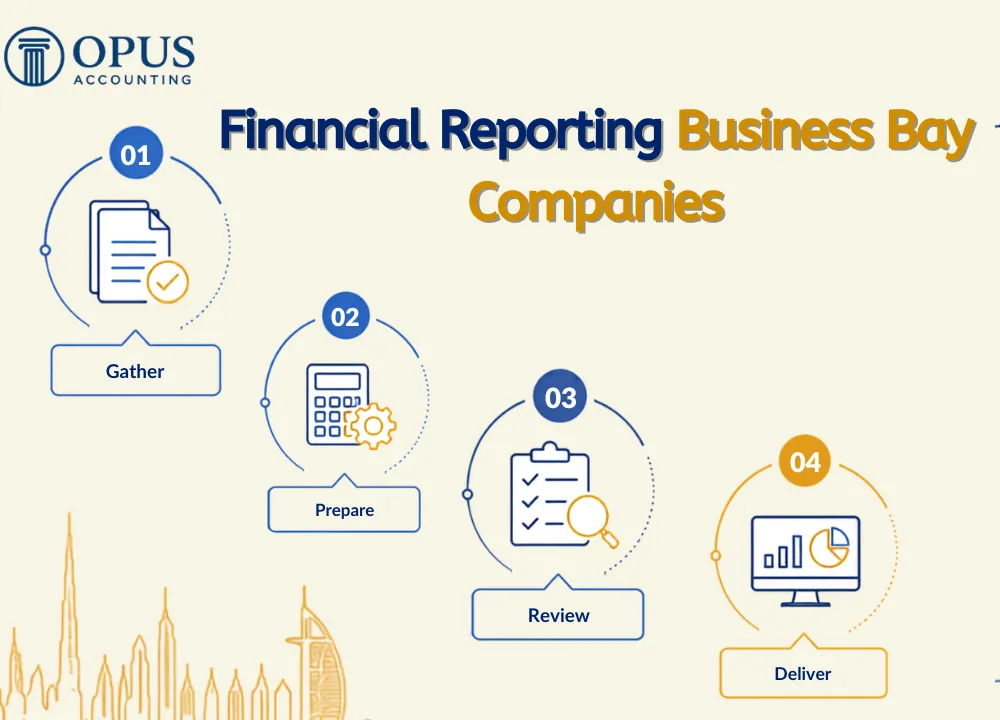
At Opus Accounting, we provide a sophisticated and comprehensive financial reporting service for Business Bay companies, ensuring accuracy, compliance, and strategic insight. Our services are designed to meet the rigorous demands of this prestigious commercial district and empower your business with financial clarity. For more details on how our expertise can benefit your operations, consider our expert financial reporting services for businesses in Dubai.
IFRS-Compliant Financial Statements: The Gold Standard
We prepare IFRS-compliant financial statements to institutional investor quality. This includes the Statement of Financial Position, Statement of Comprehensive Income, Statement of Cash Flows, and Statement of Changes in Equity, along with comprehensive notes to the financial statements. Our reports meet the stringent standards required by major banks, institutional investors, and regulatory bodies in Business Bay, ensuring your financial position is presented with utmost credibility.
Monthly Management Accounts: Your Strategic Compass
Beyond statutory reporting, we deliver detailed monthly management accounts with sector-specific metrics. These accounts provide vital, real-time financial intelligence, enabling management to monitor performance, identify trends, control costs, and make agile operational and strategic decisions in Business Bay’s fast-paced environment. This internal financial reporting for Business Bay companies acts as a crucial strategic tool.
Investor and Board Reporting: Clarity for Stakeholders
We prepare tailored investor and board reporting packages that present your financial performance and key metrics in a clear, concise, and compelling manner. Whether for quarterly board meetings, fundraising rounds, or ongoing investor relations, our reports provide the transparency and depth of analysis that sophisticated stakeholders demand from Business Bay businesses.
Budgeting and Forecasting: Charting Your Future
Effective financial planning is essential for sustained growth. Our services include comprehensive budget preparation and rolling forecast management. We work with your team to develop realistic financial targets, establish key performance indicators, and implement robust forecasting models that help you anticipate challenges and capitalize on opportunities within Business Bay. This proactive approach to financial reporting for Business Bay companies aids in strategic decision-making.
UAE Corporate Tax Ready Financial Statement Preparation
With the introduction of Corporate Tax in the UAE, businesses in Business Bay require financial statements that are fully prepared for tax compliance. Our service ensures that your financial reports accurately reflect taxable income, allowable deductions, and meet all the necessary requirements for UAE Corporate Tax filings, minimizing compliance risk and optimizing tax positions.
The Strategic Impact of Robust Financial Reporting for Business Bay
Beyond meeting statutory obligations, superior financial reporting offers profound strategic advantages for Business Bay companies, enabling them to compete more effectively and achieve sustainable growth.
Enhancing Investor Confidence and Fundraising
High-quality financial reporting signals professionalism and transparency, which are critical for attracting and retaining investors. For companies in Business Bay looking to raise capital, investor-grade financial statements, particularly those that comply with IFRS and incorporate detailed SaaS metrics for tech firms, can significantly enhance valuation and improve fundraising success rates. This type of financial reporting for Business Bay companies is a key differentiator.
Informing Mergers, Acquisitions, and Strategic Partnerships
In a dynamic market like Business Bay, opportunities for mergers, acquisitions, or strategic partnerships are common. Robust financial reporting provides the due diligence information necessary for these complex transactions, ensuring accurate valuation, seamless integration, and informed decision-making for all parties involved.
Proactive Risk Management and Operational Efficiency
Detailed financial reports allow management to identify potential financial risks early on, such as liquidity shortages or declining profitability trends. By analyzing performance against budgets and industry benchmarks, businesses can implement corrective actions, streamline operations, and enhance overall efficiency, which is crucial for thriving in Business Bay’s competitive landscape.
Choosing the Right Partner for Financial Reporting in Business Bay
Selecting the right financial reporting partner is crucial for businesses in Business Bay. It’s about finding a team that understands your unique challenges and opportunities.
Expertise and Specialization
Look for a firm with deep expertise in IFRS, local UAE regulations, and specific industry nuances relevant to Business Bay. Specialization in sectors like technology, financial services, or professional services ensures that your financial reporting is not just compliant but also insightful and strategically aligned with your business model.
Technological Prowess and Efficiency
A modern financial reporting partner leverages advanced accounting software and automation tools to ensure efficiency, accuracy, and timely delivery of reports. This technological edge translates into quicker turnaround times and more robust data analysis, which is essential for fast-paced Business Bay businesses.
Communication and Collaborative Approach
Effective financial reporting is a collaborative process. Choose a partner that offers clear communication, proactive advice, and works closely with your internal teams to understand your business objectives. This partnership approach ensures that your financial reporting truly serves as a strategic asset. Our expert financial reporting services for businesses in Dubai are built on these principles.
Frequently Asked Questions About Financial Reporting for Business Bay Companies
We are a Business Bay professional service firm with AED 12 million in revenues and four partners. Our institutional banking partner requires quarterly financial statements. What does this include?
Quarterly financial statements for institutional bank reporting typically include: a detailed Profit & Loss statement showing revenue by service line, gross margin, overhead costs by category, and EBITDA; a comprehensive Balance Sheet showing debtors, Work in Progress (WIP), cash balances, creditors, and partner equity; a Cash Flow Statement providing insights into operational, investing, and financing activities; key financial ratios (e.g., current ratio, leverage, interest coverage); and management commentary explaining significant variances and performance drivers. We prepare these reports, focusing on accuracy and clarity, typically within 15 working days of quarter-end, ensuring you meet your banking partner’s deadlines.
Our Business Bay SaaS company has international investors who need monthly reporting. What is the standard Business Bay SaaS investor reporting package?
Business Bay SaaS investor reporting is highly specialized and typically includes: an MRR/ARR waterfall (detailing new, expansion, contraction, and churned revenue), ARR segmented by customer tier, Net Revenue Retention (NRR) and gross retention rates, customer count and average contract value, key unit economics such as Customer Acquisition Cost (CAC) and Customer Lifetime Value (LTV), gross margin analysis, operating expenses broken down by function (R&D, Sales & Marketing, General & Administrative), EBITDA, cash burn rate, and runway analysis. We prepare this in the precise format your international investors require, whether it’s your proprietary template or an industry-standard SaaS reporting format, focusing on the metrics that drive investor confidence.
We have a Business Bay holding company with three operating subsidiaries. We need consolidated financial statements for our lead investor. How long does consolidated reporting take to produce?
For a group with three operating subsidiaries and well-organized individual entity accounts, consolidated financial statements can typically be produced within 4-6 weeks of the reporting date. The process involves meticulous data collection from each subsidiary, thorough elimination of all intercompany transactions (revenue, costs, loans, dividends), making necessary group-level adjustments (e.g., for goodwill or minority interests), and finally preparing the consolidated primary statements and detailed notes. We meticulously coordinate the entire process across all entities to efficiently meet your lead investor’s reporting deadline.
Our Business Bay fintech company holds significant client funds. What financial reporting framework is used for client money reporting?
For Business Bay fintech companies, client money must be rigorously separated from the fintech’s own assets in financial reporting. These funds must be held in dedicated client accounts and are reported on the balance sheet as a current liability (representing client funds owed to clients), offset by a corresponding current asset (the bank balance in the segregated client accounts). Monthly reconciliation of the total client fund liability (derived from individual client balances) to the actual client account bank balance is a mandatory and critical financial control. We specialize in preparing this reconciliation and ensuring your financial statements correctly and compliantly represent the client money position, adhering to regulatory expectations and safeguarding client trust.
What are the benefits of using an external accounting firm for financial reporting for Business Bay companies?
Engaging an external accounting firm for financial reporting offers several significant benefits for Business Bay companies. Firstly, it provides access to specialized expertise in IFRS, local regulations, and sector-specific accounting nuances without the overhead of maintaining an in-house expert team. Secondly, it ensures impartiality and enhances the credibility of your financial statements, which is vital for investors, banks, and regulators. Thirdly, it frees up your internal resources to focus on core business activities, driving operational efficiency. Finally, external firms bring best practices, robust internal controls, and often leverage advanced technology to deliver accurate, timely, and insightful reports, helping you maintain compliance and make informed strategic decisions.
Elevate Your Business with Expert Financial Reporting for Business Bay Companies
Businesses in Business Bay operate at the zenith of Dubai’s commercial world, where financial precision and strategic insight are non-negotiable. Expert financial reporting for Business Bay companies is not just about meeting compliance; it’s about unlocking growth, building investor confidence, and making informed decisions that drive your success in this competitive landscape.
Opus Accounting is dedicated to providing the sophisticated, authoritative financial reports that your premier commercial position demands. today for a free consultation and discover how our tailored financial reporting solutions can empower your Business Bay company, and for Legal Contract Drafting contact Omam Consultancy in Dubai.
Connect With Accounting Expert Now
Get Expert Accounting Advice and Solutions